
Introduction
What if your Bali itinerary didn't begin with a list of places to see? What if it began with a question: how do I want to feel when I come home?
That's the idea behind the new wave of wellness travel in Bali. Not necessarily a week of intense yoga and green juice. Sometimes wellness is simply sleeping properly, eating slowly, spending time in nature and having nowhere you need to be.
What is the best way to plan a wellness retreat in Bali?
Ready to experience Bali?
52 luxury villas. Best rate guaranteed. Free beach club access when you book direct.
BOOK →Choose quiet, green surroundings over a central location, stay in one place for at least a week, leave at least two days completely unplanned, and build the trip around a small number of local experiences rather than a packed schedule. You do not need to book a formal retreat programme to have a genuinely restful holiday — for most people, a private villa with empty days works better than a structured itinerary.
The rest of this guide is the practical version of that: where to base yourself, what to look for in the property, and how to build days that actually leave you rested.
Why Bali suits wellness travel
From the yoga studios of Ubud to the clifftops of Uluwatu and the quieter landscapes beyond the main tourist hubs, Bali lends itself naturally to slower travel. Wellness tourism has become a significant part of the island's travel landscape, alongside cultural and nature-based experiences.
But you don't need to book a traditional wellness retreat to have a wellness holiday. You can build your own, and it will usually fit you better than a fixed programme would.
Step 1: Choose your surroundings carefully
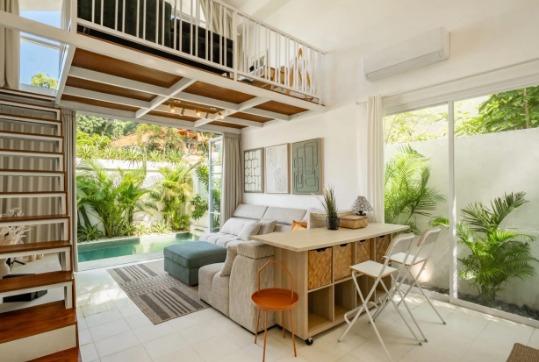
Your accommodation shapes the entire trip. A villa surrounded by jungle feels fundamentally different from a hotel in the middle of a nightlife district, and no amount of good intention will close that gap once you have arrived.
For a wellness-focused stay, look for:
- Green surroundings and genuine natural light
- Outdoor living space you would actually sit in
- A private pool rather than a shared one
- A quiet location — check what is on the other side of the wall, not just inside it
- Flat space for yoga or stretching, indoors or under cover
- Walkable access to somewhere you can eat well
- A kitchen, so breakfast does not require leaving the house
The goal isn't to disappear from civilisation. It's to have somewhere peaceful to return to. One practical point worth asking about before you book: road noise and construction. A compound can be beautifully quiet in photographs and sit directly on a busy lane. Ask where the property is relative to the main road.
Where to base yourself
- Ubud — The obvious choice, and it earns it. Jungle and rice-field surroundings, cooler air, the densest concentration of yoga studios, spas and healthy food on the island. Trade-off: no beach, and the centre is considerably busier than the valleys around it.
- Uluwatu — Clifftops, ocean air and space, with a quieter rhythm than the west coast. Suits people who rest better near the sea than in jungle. Trade-off: long drives to most other parts of the island.
- Pererenan and quieter Canggu — Surf, good food and a gentler pace than central Canggu, while keeping everything within reach. Suits a trip that is restful rather than fully switched off.
- Sidemen and the east — The quietest option, with rice-terrace valleys and almost nothing scheduled. Suits a second week rather than a whole trip for most people.
If you are travelling as a couple, our guide to the best areas in Bali for couples compares these areas in more detail. And if your dates fall in the busiest months, the peak season guide is worth reading first — crowds are the single biggest threat to a restful trip.
Step 2: Stop overplanning
Here is your permission to leave a day completely empty. No waterfall. No beach club. No must-see restaurant. Just breakfast, a swim, a massage, a book and perhaps a sunset.
A workable rule: no more than one planned thing per day, and at least two days across the week with nothing at all. Bali's roads make this more important than it sounds — two scheduled activities in different parts of the island can quietly consume four hours of driving between them. The island's shift towards slow travel is partly about exactly this: doing less, but experiencing more.
Step 3: Make wellness local
Wellness doesn't have to mean staying inside a resort all day. Some of the better options are entirely local:
- A Balinese cooking class, usually starting at a local market
- A traditional Balinese massage, which your concierge can arrange at the villa
- A sunrise walk through rice fields before the heat arrives
- An afternoon in a village, rather than at a viewpoint
- A water temple visit — go early, dress respectfully, and follow the local custom rather than the queue of cameras
The most memorable wellness experiences often aren't about pampering. They're about connection. Our insider guide to hidden luxury experiences covers the versions of these that most itineraries miss, and the concierge team can arrange experiences and private chefs directly at the villa.
Step 4: Choose a villa that lets you slow down
This is where a private villa changes the rhythm of a holiday rather than just the standard of it. Wake without an alarm. Breakfast outside. Swim. Read. Nap. Massage. Sunset. Dinner. Repeat. No timetable required.
The structural reason it works is privacy. An enclosed compound with no resident staff means nobody is moving through your space — housekeeping visits daily and the concierge team is on WhatsApp rather than on site. A resort can offer a better spa menu; it cannot offer a morning where you are the only person awake in the garden. We have set out that comparison properly in why travellers prefer villas over resorts in Bali.
How long should a Bali wellness trip be?
Seven nights in one place is the sensible minimum. The first two days go on travel, time-zone adjustment and the residual urge to be productive; rest tends to arrive somewhere around day three or four. A five-night trip split across two bases will not get you there. Ten to fourteen nights in one or two places is where people describe genuinely coming home different.
For stays beyond a month, long-term rates work differently from nightly pricing and are worth asking about directly.
The real Bali wellness experience
Perhaps the best wellness retreat in Bali isn't a retreat at all. It's a beautiful villa, a few empty days, and the freedom to decide what you want to do when you wake up.
Because sometimes the most luxurious thing you can give yourself on holiday is time.
Ready to make your next Bali trip feel less like a holiday you have to complete and more like one you can actually enjoy? Find your stay across OriVista's villa collection in Ubud, Uluwatu, Canggu and Seminyak. Book direct for the best rate, flexible check-in and OriCircle partner privileges from your first night.